Mahjong Classic: Tile Puzzle
- 4.7
- Rating
- 100.00K
- Installs
- Free
- Price

 Analysis by App-foxy
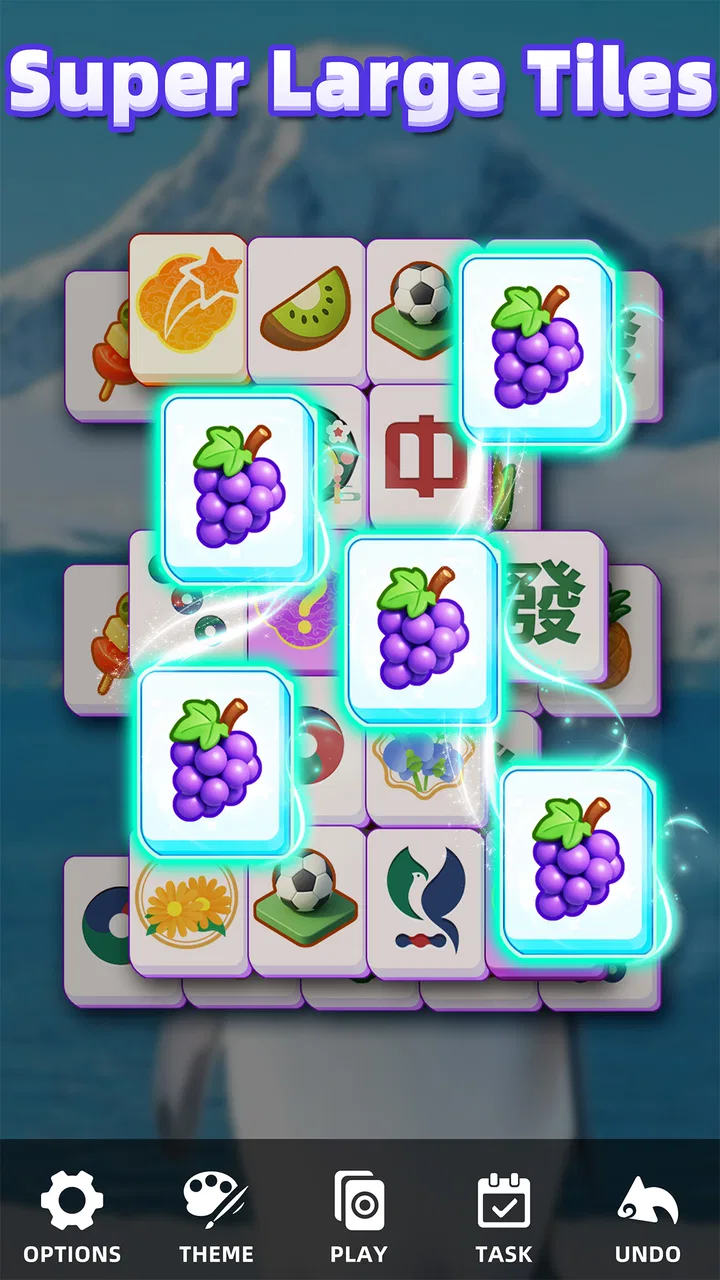
I approached Mahjong Classic: Tile Puzzle expecting a familiar matching game, and that is exactly where its appeal begins. The basic move is easy to understand: find two matching mahjong tiles, pair them, and work toward clearing the board. What makes the experience pleasant is not complexity but the steady rhythm between a small decision, immediate visual feedback, and the satisfaction of making the next pair available.
This is a free board game from NiuAIGO, rated for Everyone and available for devices running Android 6.0 or later. The current release is version 1.0.7, and the game has reached over ten thousand installs with an average rating of 4.8 from more than a hundred ratings. Those figures suggest that it has found a clear audience, but they do not tell you whether it suits your habits. After spending time with it, I see it as a compact, low-pressure puzzle for short breaks rather than a deep strategy title.
How the first move sets the tone
The first useful thing about this game is how quickly it lets me start playing. There is no need to learn a long rule set before making a decision. I scan the arrangement, look for a pair that appears safe to remove, and tap the two tiles. That direct opening is important because the game depends on visual recognition rather than a complicated tutorial or a large set of controls.
You May Also Like

 Blood Strike: 2.5 Anniversary
Blood Strike’s Loadouts Turn Every Drop Into a Tactical Gamble
A close look at Blood Strike’s custom loadouts: how fast access to signature weapons reshapes its battle royale rhythm, rewards preparation, and narrows the gap between fights.

 Pandora - Music & Podcasts
Pandora’s Music Is Easy to Start, but Harder to Recover
Pandora’s strength is its low-effort path from a seed to a station. Its weak spot is how much confidence it asks you to place in connection, setup, and quiet recovery.

 8 Ball Pool
 Is Built on Rivalries, Rematches, and Routine
A close look at the rivalries, rematches, shared routines, and unanswered safety questions that turn a quick pool match into a persistent mobile community.

 Samsung Music
’s Quiet Strength Is Playing What You Already Own
Its reach comes less from spectacle than from dependable access to a personal library. That simplicity is both the app’s strongest retention engine and its ceiling.

 AccuWeather: Weather Radar
AccuWeather Review: A Quick, Clear Forecast for Everyday Decisions
For everyday plans, the best forecast is the one you can understand quickly. AccuWeather makes rain timing, radar, and local conditions easy to act on, with a few trade-offs.

 Hill Climb Racing
Why Hill Climb Racing Still Turns Crashes Into One More Run
A tiny car, a bumpy hill and one more upgrade: Hill Climb Racing keeps resurfacing because its simple chaos makes every near-miss feel personal.
More From Our News Desk
View All News


At its best, the opening move feels like tidying a crowded desk. I am not solving an abstract equation; I am reducing clutter one pair at a time. The board gives me a manageable visual problem, and every successful match confirms that I read the layout correctly. For someone who wants a puzzle that can be understood while waiting for a bus or taking a short break, this simplicity is a real advantage.
There is also a useful distinction between spotting a matching pair and deciding whether it is the right pair to remove first. A visible match may be tempting, but clearing it can expose or block the options I will need later. I found that the more enjoyable approach is to pause for a moment and inspect the surrounding tiles before tapping. That tiny habit turns the game from pure visual matching into light planning.
My practical tip is to search for pairs that open space before chasing the easiest match. When several choices are available, I usually favor a move that reduces a crowded area or reveals tiles underneath a stack. This does not make every board predictable, but it gives each tap a purpose and helps prevent the feeling that I am simply clicking whatever pair I notice first.
The tile artwork also matters more than it may seem. Mahjong symbols can take a moment to distinguish when the board is busy, especially if I am playing quickly or using a smaller phone screen. I recommend slowing down rather than relying on memory alone. A deliberate glance at the full tile face is more reliable than assuming two symbols match because their general shapes look similar.
Why each match feels readable
The feedback rhythm is the heart of the experience. I choose a tile, choose its match, and receive an immediate indication that the pair has been accepted. The board becomes slightly less crowded, which gives me a visible sense of progress without requiring a separate scorekeeping routine in my head. That immediate response keeps the game approachable for casual players.
What I enjoy is the balance between action and observation. A successful match is a small reward, but it also changes the next decision. The board is not static after I make a pair; the removal creates a new visual situation. I then scan again, identify what has become available, and decide whether to continue with a safe move or spend more time planning.
This cycle makes the game suitable for different moods. When I have only a minute, I can make a few pairs and stop. When I have more time, I can treat the board as a quiet concentration exercise. It is not demanding in the same way as a timed arcade game, and that makes it easier to return to when I want something calming rather than stimulating.
The same calm design can also be a limitation. Players who need constant novelty, dramatic challenges, or a strong competitive layer may find the feedback too restrained. The pleasure comes from gradual clearing, not from spectacle. I would not choose this as my main game when I want a story, a fast reaction test, or a multiplayer contest.
Another useful way to play is to divide the board mentally into zones. Instead of looking everywhere at once, I inspect one crowded area, identify its available pairs, and then compare those choices with what is visible elsewhere. This reduces visual overload and makes mistakes less likely. It is a simple technique, but it makes a noticeable difference when several similar tiles are on screen.
The reward is progress, not pressure
The main reward is the board becoming cleaner. That sounds modest, but it is precisely why the game works as a relaxing puzzle. Each pair removed gives me a small feeling of completion, while the remaining tiles preserve enough uncertainty to make the next move meaningful. I am rewarded for attention and patience rather than speed alone.
I also like that the reward arrives in layers. First, there is the immediate confirmation of a correct match. Then there is the larger benefit of opening more of the layout. Finally, there is the satisfaction of seeing the board approach completion. These stages create a gentle reason to continue without making the experience feel like work.
For everyday use, I can imagine playing it during a coffee break, while waiting for an appointment, or before bed when I want something more focused than scrolling through social media. A realistic session might begin with the intention of making only a few matches. Once the board opens up and a promising chain of moves appears, I naturally want to finish that section rather than leave it half cleared.
That sense of “one more move” is not driven by a complicated reward economy in my experience. It comes from unfinished visual order. A nearly cleared area invites me to complete it, and a newly exposed pair makes the next action obvious. This is a good example of a puzzle using its board state as motivation instead of relying entirely on external rewards.
There is a trade-off for players who prefer measurable mastery. A traditional competitive board game may offer rankings, head-to-head decisions, or a clear long-term skill ladder. This title feels more personal and self-contained. If your idea of progress is improving a time, beating an opponent, or building a collection, a different board game will probably provide stronger motivation.
The free price makes it easy to try, although in-app purchases range from $2.99 to $9.99 per item. I would approach those purchases carefully and decide whether they add meaningful value to the way I play before spending anything. For a casual player, the sensible starting point is to enjoy the basic matching loop and see whether it earns a regular place in your routine.
When the board resets and the habit begins again
A good puzzle session needs a natural stopping point, and this game gets that from the board itself. Once I have cleared the available arrangement, the immediate goal is complete. That creates a clean reset: I can put the phone down without feeling that I have abandoned a long campaign or interrupted a story at an awkward moment.
At the same time, the short-form structure gives me a reason to begin another session later. The next round promises the same understandable action but a fresh arrangement to inspect. That combination is important. The game does not ask me to remember a complicated narrative or maintain a large set of resources; I can return after a day away and understand what I am doing immediately.
This reset is especially useful for people who want boundaries around mobile gaming. I can decide to play until I finish the current board, then stop. That is easier to manage than a game built around long missions, live events, or constant competitive pressure. However, the same repeatable structure may feel too similar over time if you need substantial changes between sessions.
My advice is to use it as a deliberate break rather than an endless background activity. Put the game down after completing a board or after a clearly defined number of moves. That keeps the calming quality intact and prevents the matching loop from becoming mindless tapping. The game is strongest when I am paying attention to the layout, not when I am playing automatically.
The Everyone age rating also fits the straightforward nature of the experience. I would consider it appropriate for a broad audience, including someone who is new to mobile puzzles and does not want complicated controls. Still, younger players may benefit from guidance around optional purchases, since the game is free to download but includes paid items.
Where it stands beside other board puzzles
Compared with classic solitaire, this game asks for more visual searching and less card-sequence planning. Solitaire can be satisfying when I want a familiar ruleset with a stronger sense of probability and move order. Mahjong Classic: Tile Puzzle feels more immediate because the central task is visible from the start: identify matching tiles and decide which pair helps the board most.
Compared with word puzzles, it requires less language and more visual attention. That makes it a better fit when I am tired, when I do not want to think in another language, or when I prefer symbols to clues. On the other hand, word games often provide a wider range of vocabulary challenges, so they may offer more variety for players who enjoy learning and recall.
Compared with elaborate strategy board games, this is much easier to enter but far less demanding in depth. There are no long rules to memorize before the first meaningful decision. That is a strength for casual play and a weakness for anyone looking for layered systems, negotiation, resource management, or a campaign that develops over time.
The closest alternative is another tile-matching game, and here the choice depends on what you value. If you want a calm board-clearing routine with a familiar mahjong presentation, this is a sensible option. If you want timers, dramatic effects, extensive progression, or a strong social component, you should look elsewhere. The game’s identity is built around quiet repetition, not feature overload.
Small habits that improve the experience
I found three habits particularly useful. First, I scan for pairs that are visually distinctive before dealing with similar-looking symbols. This gives me an easy opening while reducing the chance of confusing tiles. Second, I avoid clearing a pair immediately if it seems to be supporting access to a more useful area. Third, I take a brief pause whenever the board becomes sparse, because the final choices often deserve more attention than the opening ones.
A fourth habit is to play with a consistent viewing angle and brightness. Mahjong symbols depend on clean visual separation, and a dim screen or rushed glance can make a simple board feel unnecessarily difficult. This is not a special feature of the game, but it is a practical adjustment that helps the specific tile-matching format work better on a phone.
I would also avoid treating every move as equally urgent. The game rewards a steady scan more than frantic tapping. If I am unsure, I look at the open spaces around a pair and ask what the board will look like after those tiles disappear. That question creates a useful bridge between the first action and the later reward: I am not merely matching symbols, I am shaping the next set of choices.
The main friction is that the experience can become repetitive for players who want a sense of escalation. Its simple loop is the reason it is relaxing, but it also defines its ceiling. I would skip it if I am searching for a game with a rich narrative, demanding long-term strategy, or a large social community. I would also be cautious about purchases until I know whether the free experience already meets my needs.
My verdict on the complete loop
Mahjong Classic: Tile Puzzle succeeds because its central loop is clear from the first tap. I identify a pair, remove it, watch the board open, and receive enough progress to make another decision. The reward is tangible but gentle, and the completed board provides a natural reset. That makes the next session easy to begin without making the current one feel endless.
For me, the strongest use case is a short, quiet break when I want to focus on something simple but not entirely passive. It is also a good introduction to mahjong-style tile matching for someone who prefers accessible rules and a broad age rating. NiuAIGO has kept the concept approachable, and the game’s free entry point makes trying it straightforward.
My recommendation comes with a clear condition: choose it for calm visual puzzle play, not for deep board-game strategy or constant novelty. The average rating of 4.8 and more than ten thousand installs show that many players are responding well to its format, but the right question is whether you enjoy repeating a polished, uncluttered action cycle.
After playing, I would recommend giving it a few unhurried sessions rather than judging it from a quick burst. The appeal grows when I stop chasing the first available pair and start thinking about how each removal changes the board. If that small planning step feels satisfying, this free game can become an easy companion for spare moments. If it feels repetitive, the same simplicity that attracts casual players will probably be the reason you move on.
FAQs for Mahjong Classic: Tile Puzzle
01What is Mahjong Classic: Tile Puzzle and how does it work?
Mahjong Classic: Tile Puzzle is a traditional tile-matching game that challenges players to clear the board by matching pairs of identical tiles. The tiles are stacked in complex arrangements, and only unblocked or "free" tiles can be matched. This requires strategic thinking and careful planning, providing both a relaxing and stimulating experience.
02Is Mahjong Classic: Tile Puzzle free to play?
Yes, Mahjong Classic: Tile Puzzle is free to download and play. However, it may offer in-app purchases and ads. These purchases can enhance gameplay by offering hints, additional tile sets, or other cosmetic features. Players can still enjoy the full game experience without making any purchases.
03What are the key features of Mahjong Classic: Tile Puzzle?
Key features include a variety of levels with increasing difficulty, beautiful tile designs, and customizable backgrounds. The game also provides hints and shuffle options to assist players when they get stuck. Additionally, it offers daily challenges and achievements to keep gameplay engaging and rewarding.
04Can Mahjong Classic: Tile Puzzle be played offline?
Yes, Mahjong Classic: Tile Puzzle can be played offline, making it a great option for entertainment without requiring an internet connection. This feature is particularly useful for playing on the go or in situations where connectivity is limited, ensuring uninterrupted gameplay.
05Is Mahjong Classic: Tile Puzzle suitable for all ages?
Mahjong Classic: Tile Puzzle is suitable for players of all ages due to its simple rules and intuitive interface. It can help improve concentration and cognitive skills in both children and adults. However, younger players might need guidance to fully understand the strategic aspects of the game.
Pros
- Engaging traditional gameplay experience.
- Visually appealing tile designs.
- Intuitive controls for easy navigation.
- Variety of challenging levels.
- Relaxing background music enhances focus.
Cons
- Limited customization options for tiles.
- Ads can be frequent and disruptive.
- No multiplayer mode available.
- Occasional bugs cause level reset.
- In-app purchases can be pricey.

Mahjong Classic: Tile Puzzle
Gallery